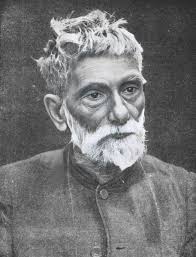


Prafulla Chandra Ray is remembered as one of the pioneers of modern scientific research in India. A distinguished chemist, teacher, industrialist, and thinker, he played a major role in shaping scientific education and chemical industry in the country. His work not only advanced chemistry but also encouraged the development of indigenous industries during the colonial era. Because of these contributions, he is widely known as the father of modern chemistry in India.
Early Life
Prafulla Chandra Ray was born on 2 August 1861 in Raruli-Katipara village in the Khulna district, which is now part of present-day Bangladesh. His father, Harish Chandra Ray, was a progressive landowner who valued education and social reform. His mother, Bhubanmohini Devi, also encouraged learning and intellectual curiosity in the family. Growing up in such an environment helped Ray develop a deep interest in knowledge from an early age.
During his childhood, Ray received his early education in a village school. Later, his family moved to Kolkata so that he could access better educational opportunities. He studied at the Hare School and later continued his studies at the Metropolitan Institution, which is now known as Vidyasagar College.
Although Ray faced serious health problems during his youth and had to interrupt his formal schooling for some time, he did not stop learning. He used that period to read widely about science, literature, and history. This habit of self-study later helped shape his analytical thinking and scientific curiosity.



Higher Education in Britain
Ray’s talent and dedication helped him earn the prestigious Gilchrist Scholarship in 1882. This opportunity allowed him to travel to the United Kingdom for higher studies. He joined the University of Edinburgh, where he studied chemistry in depth.
During his time in Edinburgh, Ray proved himself to be an excellent student. He completed his Bachelor of Science degree in 1885 and later obtained a Doctor of Science (D.Sc.) degree in 1887. His research work during this period demonstrated his strong understanding of chemical science and helped him gain recognition among academic circles.
Teaching Career in India
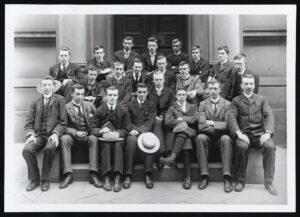
After completing his studies, Ray returned to India in 1888 and began teaching chemistry at Presidency College, Kolkata. At that time, scientific laboratories and research facilities in India were limited. Despite these challenges, Ray remained committed to developing scientific education in the country.
He was known as an inspiring and dedicated teacher who encouraged students to think scientifically and conduct experiments. Many of his students later became prominent scientists and researchers. Ray strongly believed that education should not be limited to theory but should involve practical experiments and research.
Scientific Discoveries
One of Ray’s most important scientific achievements was the discovery of mercurous nitrite, a compound that had not been previously studied in detail. His research on nitrites and other chemical compounds earned him international recognition. His findings were published in respected scientific journals and were appreciated by chemists around the world.
Through his research, Ray made valuable contributions to inorganic chemistry and helped establish India’s presence in global scientific discussions. His work showed that Indian scientists could produce research of international quality.
Contribution to Indian Industry
Apart from his academic achievements, Ray also believed that science should help improve the economic condition of the country. With this goal, he established Bengal Chemicals & Pharmaceuticals in 1901. This organization became the first Indian chemical and pharmaceutical manufacturing company.
The company produced medicines and chemicals locally, which reduced dependence on imported products. Ray’s effort played an important role in encouraging the idea of self-reliance in industry. His initiative also supported the spirit of the Swadeshi movement, which promoted the use of Indian-made goods.
Contribution to the History of Science
Ray was not only a chemist but also a scholar interested in the history of scientific knowledge in India. He wrote the well-known book A History of Hindu Chemistry. In this work, he explored the achievements of ancient Indian scholars in chemistry and medicine.
The book highlighted the scientific contributions made in India centuries ago and helped restore confidence in India’s intellectual heritage. It remains an important reference for historians studying the development of science in India.
Social Service and Personal Life
Ray lived a simple and disciplined life. Despite receiving recognition and honors, he remained humble and focused on education and social service. He often donated a significant portion of his income to support students and educational institutions.
He believed that science should serve society and help improve people’s lives. His dedication to teaching and social welfare made him highly respected among students and colleagues.
Legacy
Prafulla Chandra Ray passed away on 16 June 1944 in Kolkata. Even after his death, his influence continues to inspire scientists, educators, and entrepreneurs.
Today, he is remembered as a pioneer who laid the foundation for chemical research and industry in India. His life demonstrates how dedication to science, education, and national progress can bring lasting change to society. His contributions remain an important part of India’s scientific heritage and continue to inspire future generations.